

HALT! and alcohol cravings
Bringing H.A.L.T. Into Your Daily Life
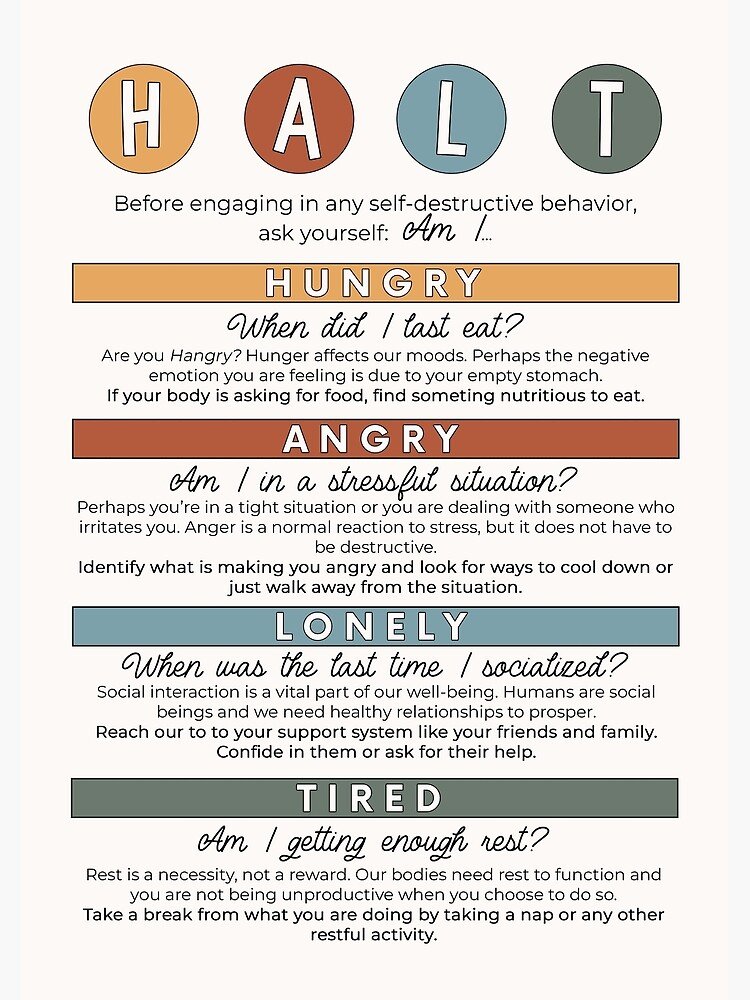
The H.A.L.T. method is simple, but powerful. It’s about pausing long enough to check in with yourself: Am I Hungry, Angry, Lonely, or Tired?
These four states can quietly run the show if we don’t notice them — and they often explain why we make choices that don’t serve us.
Here’s how to use it in your daily life.
Build the habit with small steps
Set reminders: Pop a few check-in points into your phone (morning, midday, late afternoon are prime times). Just take 30 seconds to pause and notice what you need.
Keep a quick journal: Scribble down when you notice any of the four states and how it influenced your mood or decisions. Over time, you’ll spot patterns and triggers.
Mindful moments: Try a short body scan or breath-based meditation. This helps you tune into subtle hunger, stress, or fatigue cues before they escalate.
Understanding and using each element of H.A.L.T.
Hunger vs cravings
Sometimes we raid the pantry out of boredom or stress, not genuine hunger. Mindfulness helps us spot the difference. Eating balanced meals at regular times makes it easier to stay steady and avoid those “hangry” crashes.
Anger
Anger isn’t bad — it’s a signal. The key is to catch what’s underneath: stress, exhaustion, unmet needs. Try deep breathing, taking perspective, or giving yourself a quick time-out. Anger doesn’t have to run the show.
Loneliness
Loneliness can creep up, especially if we’re tired or scrolling social media. It helps to have a few safe connections ready — a friend, family member, or group you can reach out to. If depression makes that feel impossible, even a short walk, a movie, or sitting in a café around people can shift your state. Quality of connection matters more than quantity.
Tiredness
Sleep is underrated. Without it, everything feels harder — moods dip, anxiety spikes, choices get reactive. Stick to a regular sleep routine, make your space restful, and add a wind-down ritual before bed.
Why it matters
When we pause to check in with H.A.L.T., we stop running on autopilot. We make calmer decisions, respond rather than react, and care for ourselves before things spiral. It’s especially powerful in recovery, where catching these states early can protect against relapse. But it’s just as useful in everyday stress.
Try this today
Set a reminder to ask: Am I hungry, angry, lonely, or tired?
Jot down what you notice.
Take one small step to meet the need (snack, stretch, text a friend, early night).
Using H.A.L.T. is really just another way of practising kindness toward yourself. Each pause is a chance to reset, take care of your needs, and move through the day with a little more steadiness and ease.
HALT FAQs
What does the H.A.L.T. method mean for decisions?
It’s a quick self-check before you act. Ask yourself: Am I hungry, angry, lonely, or tired? If the answer is yes, meet that need first. Decisions land better when we’re not running on empty or in an emotional storm.
How is H.A.L.T. used in DBT?
In Dialectical Behaviour Therapy, H.A.L.T. is a simple mindfulness tool. It helps people pause, notice what’s really going on inside, and manage their emotional state before reaching for unhealthy coping strategies.
How do I manage my H.A.L.T.?
Make it a habit to check in. If you’re hungry — eat something nourishing. Angry — try breathing, moving, or talking it out. Lonely — reach out to a safe person or community. Tired — give yourself rest. The point is to notice and act.
Why ask, “Am I hungry, angry, lonely, or tired?”
Because those four states sneakily drive a lot of our reactions. This one question slows you down long enough to figure out what’s really going on — and what you actually need.
Applying H.A.L.T. in Alcohol Recovery
If I’m Hungry, I can …
Eat a balanced snack (protein + complex carbs) to steady blood sugar.
Keep quick options on hand: nuts, fruit, boiled eggs, yoghurt.
Drink a glass of water first — thirst sometimes feels like hunger (and can trigger cravings).
Plan regular meals so I don’t get “hangry” and tempted to numb with alcohol.
If I’m Angry, I can …
Step outside and take 5–10 deep breaths.
Journal a “rage page” — write it out without censoring, then let it go.
Move my body: walk, run, stretch, punch a pillow, hit the gym.
Call a supportive friend or sponsor instead of bottling it up.
Use the “Pause button” — wait 20 minutes before reacting or deciding.
If I’m Lonely, I can …
Text or call a safe person (don’t wait for them to reach out first).
Go to a meeting (AA, SMART Recovery, or another peer group).
Join an online community or listen to a podcast that reminds me I’m not alone.
Spend time around people in simple ways — a café, library, gym, or park.
Do something kind for someone else: volunteering, checking in on a friend.
If I’m Tired, I can …
Give myself permission to rest (nap, stretch, or an early night).
Switch off screens and do a calming activity before bed (reading, bath, meditation).
Make a “sleep ritual” — same wind-down steps every night.
Remind myself that fatigue makes cravings louder — but sleep is the best reset.
If I can’t sleep, practise relaxation (body scan, Insight Timer track) rather than lying in frustration.
Key takeaway:
Cravings often spike when one of these four needs is unmet. By meeting the real need — food, expression, connection, or rest — you’re taking alcohol out of the equation and giving yourself healthier coping tools.
Related Articles












Did last night end in a quick drink-or-three to decompress after a stressful day? No judgement here. That used to be me.
I hear this daily from single mums running on empty.
From high-fliers in careers that take everything they’ve got.