

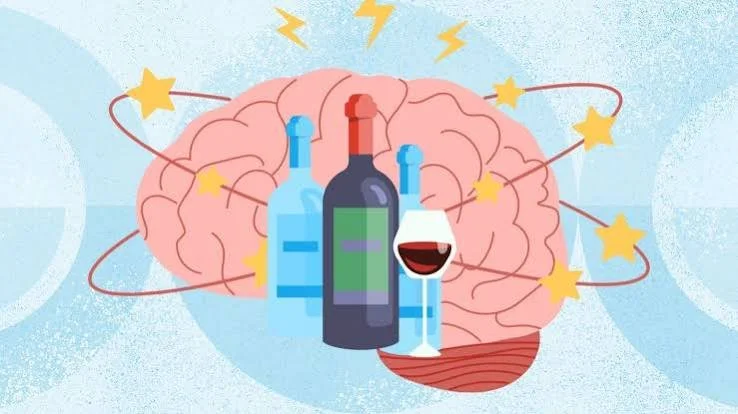
There's a conversation we're not having enough in neurodivergent communities, and it comes with a big price tag.
It's the one about why so many of us with ADHD, autism or both find ourselves reaching for substances, alcohol particularly, more often than we'd like - and why traditional advice about "just cutting back" often falls flat for us.
If you've ever felt like alcohol is the only thing that quiets the noise, makes social situations manageable, or just helps you finally feel "normal" for a few hours, you're not alone.
In fact, research shows this overlap is far from rare — a major 2021 meta-analysis found that up to 43% of ADHDers will experience alcohol use disorder (Luderer et al., 2021). 2 - 4 times more than the general population. That’s a staggering number.
Similar studies for autism are less clear cut. It’s an under researched area, that’s starting to gain some momentum. Here we can see a wide range of prevalence reported: up to 16% in the autistic population increasing to 36% seen in clinical settings. Either way, we know it’s the most reported substance used by autists (although marijuana is up there too) and use increases as people age.
All of this can understandably feel like a double dose of ‘unfair’ in life’s genetic lottery.
The Neurodivergent Difference
Here's what research is also increasingly showing us: ADHD and autistic brains process reward, stress, environments and social connection differently. This is simple neurobiology. And it matters a great deal when we're trying to understand our drinking patterns, why it feels trickier to manage our consumption, and in dialling down the shame that us neurodivergent folks often feel so heavily about our alcohol use.
For ADHD brains, alcohol can feel like an instant ticket to the winner’s hall of life. Initially at least. It quietens the mental chaos, the ever-pinging thoughts and ideas, it turns down the volume of any sensory challenges and constant life demands, it can dial down the hyperactivity and self-criticism, it makes us feel ok in our own skins at last. It’s dopamine seeking, just to achieve a base line that others take for granted. It’s completely understandable that it feels like a viable solution to managing day to day life.
For autistic brains, alcohol can often serve a different purpose—it can lower the debilitatingly exhausting effort of masking, reduce sensory overwhelm, dial down anxiety and make social situations feel less like navigating a foreign country without a map. It becomes a coping mechanism for surviving in a neurotypical world.
If you’re AuDHD these patterns often overlap and intertwine in complex ways.
What I see frequently with my clients is that alcohol is used to manage emotional dysregulation, overwhelm, impulsivity, boredom, poor self-esteem, to stave off burn out, a way to cope with responsibilities of adulting and particularly parenting. Basically, to stay afloat in adult life when it all feels too much.
Alcohol - it doesn’t have to be a ‘rock bottom’ thing for you to want to change
There’s a narrative in our society that you’re either a ‘park-bench-rock-bottom-AA’ type of drinker or you’re ‘fine’. It’s so pervasive I did a TEDx Talk speaking about why it’s so unhelpful and inaccurate.
It’s a narrative that keeps people stuck in limbo around their drinking. One where they grapple with themselves frequently about whether they’re the ‘A word’ or ‘drinking too much’ but relaxing back into it because external sources (your family, your friends, your GP, society) indicate there’s no real issue.
While we can always use the government’s recommended guidelines for alcohol to gauge whether that’s the case, often the numbers don’t reflect the complexity of alcohol use. I see clients who may be having 2-3 glasses a night and feel within themselves they are drinking too much (for whatever reason), but they’re stuck in this place where they’re told they’re being too hard on themselves or they’re overthinking things.
Would we say the same thing with cigarettes? With illicit drugs? Of course not.
So, it’s often a more useful barometer to reflect on alcohol’s role in our lives rather than focus solely on the number of units or days that we drink.
Ask yourself the following - are you someone who:
drinks somewhere between 'now and again' and 'rock bottom'
when you drink you drink more than you’d like or had planned to
you may take breaks from alcohol, but it never lasts
it may not appear to others that your drinking is an issue
you silently worry, regret and fret about drinking – not just after a big night out but because you have a sense of it being more than you’d like
Perhaps a better question I find to ask yourself – without judgement - is ‘does alcohol make my life worse in any way? Is alcohol preventing me from being the person I want to be – as an individual, as a parent, as a partner, a friend, in my career, with my health?’
This is a legitimate question to ask, with a recent report showing almost half of Australians are negatively affected by others’ alcohol use. It’s perhaps ironic then that peer pressure is often a factor in why we keep doing it – to fit in, to make social interaction easier, to avoid being rejected.
The bottom line is that if alcohol is taking up a lot of your head space and you’re frequently negotiating with yourself – around the drinking start times, the types of alcohol you drink, the days of the week – and still finding yourself back in the same place, that’s enough data to warrant further exploration.
Why the usual advice about alcohol doesn’t work for ND brains
Most alcohol reduction strategies are designed for neurotypical brains. They assume you can "just be more mindful," rely on willpower, use endless motivation or follow rigid rules without considering how traits like time blindness, alexithymia (difficulty identifying your own emotions), interoception, internalised shame or sensory sensitivities might get in the way.
They don't account for the fact that when you're constantly managing executive dysfunction, emotional dysregulation, paralysing social anxiety or the exhaustion of masking, alcohol might genuinely be the only tool in your kit that seems to work. Even when you know it's creating problems down the line.
This is where our existing ‘shame pile’ grows – and grows. We tell ourselves we should have more self-control, that we're weak, that everyone else can moderate, or doesn’t need alcohol to socialise. Then what do we reach for to make ourselves feel better? And so the cycle continues.
The road less travelled: A different approach
What if, instead of fighting against your neurodivergent traits, you could work with them?
What if you could understand the specific ways your ADHD impulsivity or autistic need for routine or the toll of masking shapes your drinking patterns - and use that knowledge to build strategies that actually fit your brain?
Clinical guidelines show that when we’re dealing with comorbidities such as neurodivergence and alcohol use challenges, we need to treat both. Many of us will also have other mental health challenges in that mix too, and it seems that we’re finally waking up to the reality that treatment in silos – e.g. just for alcohol without considering neurodivergence, or just for alcohol without considering anxiety – really doesn’t tend to stick.
So, we need to take a different approach; a holistic one. We need to look at you and your life and start there, working with the way your brain and nervous system experience the world.
It’s not about labelling yourself or pathologising your choices. It's about getting curious. Why does that third glass of wine feel non-negotiable after a day of masking at work? What need is being met when you impulsively grab a beer every time you feel under stimulated? What happens in your nervous system right before you pour that drink – or if you don’t?
When we understand the "why," we can start building alternatives and bringing in tools that meet the same needs without the morning regret, the brain fog, or the creeping sense that alcohol is taking more than it gives.
Building your own personal toolkit
Real change happens when you have practical, neurodivergent-friendly tools that work with your brain. This might look like:
Body-based regulation techniques for when you're overwhelmed or dysregulated (because often your brain can't access cognitive strategies)
Environmental modifications that reduce decision fatigue around drinking
Routines that work with time blindness rather than relying on "remembering" to make good choices
Alternative sensory or dopamine-seeking activities that satisfy the same itch
Identifying triggers in advance – including Rejection Sensitive Dysphoria
Experimental, harm reduction approaches that meet you where you are, not where you "should" be
You don't have to figure this out alone
It’s actually a big factor in sustaining changes if you don’t. I’ve worked with many hundreds of people and have observed it’s very difficult to make changes stick without community, connection and non-judgemental support from others, which echoes my lived experience too.
If you're reading this and recognising yourself, know that there's nothing wrong with you for struggling with alcohol. Your brain works differently, and that means your path forward will look different too. Understanding this and why it’s so relevant is the first step.
Whether you're sober-curious, actively trying to cut back, or simply wondering if your drinking patterns are connected to your neurodivergence, there's room for you to explore this without judgment.
You deserve strategies that actually work for your unique brain, rather than another 5, 10 or 15 years spent struggling behind the scenes. I spent many, many years in that liminal space and it’s why I’m passionate about supporting other neurodivergent folks to find an escape hatch sooner.
Sometimes, the most radical thing we can do is approach ourselves with curiosity instead of criticism - and equip ourselves with the right knowledge and tools for the brain and nervous systems we actually have.
Sources for further reading:
Australian ADHD Professionals Association. (2022). Australian evidence-based clinical practice guideline for ADHD. https://aadpa.com.au
Barber, W., Aslan, B., Meynen, T., Marsden, J., Chamberlain, S. R., Paleri, V., & Sinclair, J. M. A. (2025). Alcohol use among populations with autism spectrum disorder: Narrative systematic review. BJPsych Open, 11(1), e15. https://doi.org/10.1192/bjo.2024.824
Beaton, D. M., Sirois, F., & Milne, E. (2022). Experiences of criticism in adults with ADHD: A qualitative study. PLOS ONE, 17(2), e0263366. https://doi.org/10.1371/jurnal.pone.0263366
Birrell, L., Prior, K., Vescovi, J., Sunderland, M., Slade, T., & Chapman, C. (2025). Treatment rates and delays for mental and substance use disorders: Results from the Australian National Survey of Mental Health and Wellbeing. Epidemiology and Psychiatric Sciences, 34, e3. https://doi.org/10.1017/S2045796025000034
Laslett, Anne-Marie; Hopkins, Cassandra; Smit, Koen; Cook, Megan; Room, Robin; Kuntsche, Sandra; et al. (2025). Alcohol’s Harm to Others in Australia: Patterns, Costs, Disparities and Precipitants. La Trobe. Report. https://doi.org/10.26181/30715955.v1
Luderer, M., Ramos-Quiroga, J. A., Faraone, S. V., Zhang-James, Y., & Reif, A. (2021). Alcohol use disorders and ADHD. Neuroscience & Biobehavioral Reviews, 128, 648–660. https://doi.org/10.1016/j.neubiorev.2021.07.010
Luquiens, A., Mura, T., Dereux, A., Louville, P., Donnadieu, H., Bronnec, M., & Benyamina, A. (2024). Emotional regulation efforts pay off in quality of life points: The interaction of impulsivity, emotion dysregulation, and adult probable ADHD on alcohol-related quality of life. Journal of Psychiatric Research, 182, 115. https://doi.org/10.1016/j.jpsychires.2024.115
Ressel, M., Thompson, B., Poulin, M.-H., Normand, C. L., Fisher, M. H., Couture, G., & Iarocci, G. (2020). Systematic review of risk and protective factors associated with substance use and abuse in individuals with autism spectrum disorders. Autism, 24(4), 899–918. https://doi.org/10.1177/1362361320910963
Related Articles









What I’ve noticed after running groups for years is that the vibe of a group where everyone’s ADHD and stuck in the same loop with alcohol is genuinely different.